

Streaming quality used to be a simple trade: convenience for sound. Not any more. Every major service now offers at least CD-quality lossless audio, several go well beyond it, and the differences between them have more to do with catalogues, apps and ecosystems than outright sound. Here is an honest tour — and an equally honest note about what actually matters.

First, the words
Lossy streaming (standard Spotify, YouTube and most of the internet’s history) throws away part of the signal to save bandwidth — usually politely, sometimes audibly. Lossless keeps every bit of a CD-quality file. Hi-res goes further still, with more resolution than CD; whether that audible margin matters is a debate we’re happy to demonstrate rather than argue.
The services, briefly
Spotify — the best discovery and playlists in the business, and lossless streaming has now arrived; for many listeners the everyday choice. Tidal — a long-standing favourite with hi-fi people, now delivering hi-res in open FLAC, with strong curation. Qobuz — the audiophile’s pick: excellent hi-res catalogue, editorial written by people who genuinely care about sound. Apple Music — lossless and hi-res included at no extra cost; note that full resolution needs a wired DAC rather than AirPlay or Bluetooth. Amazon Music — a large lossless catalogue that suits households already in the ecosystem. Deezer — CD-quality lossless with strong playlists, and often overlooked.
The honest part
Format headlines matter less than the equipment decoding them. A well-set-up system streaming CD-quality will embarrass a poor system playing hi-res every single time. The service you enjoy using — the one whose playlists and library keep you listening — is worth more than the one with the biggest numbers. And the component doing the converting, the streamer and its DAC, shapes the result more than the badge on the app.
The numbers, decoded
CD quality means 16-bit samples taken 44,100 times a second. Hi-res means 24-bit samples at 48, 96 or 192 thousand a second. Bit depth sets how quiet the quietest detail can be before it sinks into noise; sample rate sets the highest frequency that can be captured, which is always half the rate. CD quality already covers the range of human hearing, which is why the step from lossy to lossless is easy to hear and the step from lossless to hi-res is subtler — more a matter of ease and space than of anything you could point to.
How the music reaches the system matters just as much
A lossless subscription does not guarantee a lossless signal at the loudspeakers. Bluetooth always compresses, however the codec is named, so it is for convenience rather than quality. AirPlay tops out at about CD quality. The best route is for the streamer itself to fetch the music directly from the service, with your phone acting only as the remote control: that is what Spotify Connect, Tidal Connect, Qobuz Connect and a streamer’s own app all do. As a bonus, calls and notifications no longer interrupt the music, and the phone’s battery survives the evening.
Your network, briefly
Even the highest-resolution stream needs only a few megabits per second — a fraction of what a film uses — so broadband speed is almost never the problem. Dropouts are nearly always down to weak Wi-Fi where the hi-fi happens to live. A network cable to the streamer is the complete cure where one can be run; otherwise a mesh point in the same room usually does it.
A sensible way to choose
All the main services offer a free trial. Take two of them in the same month, search for the albums you know best, and notice which app you reach for. That is the one to keep.
Hear the differences properly
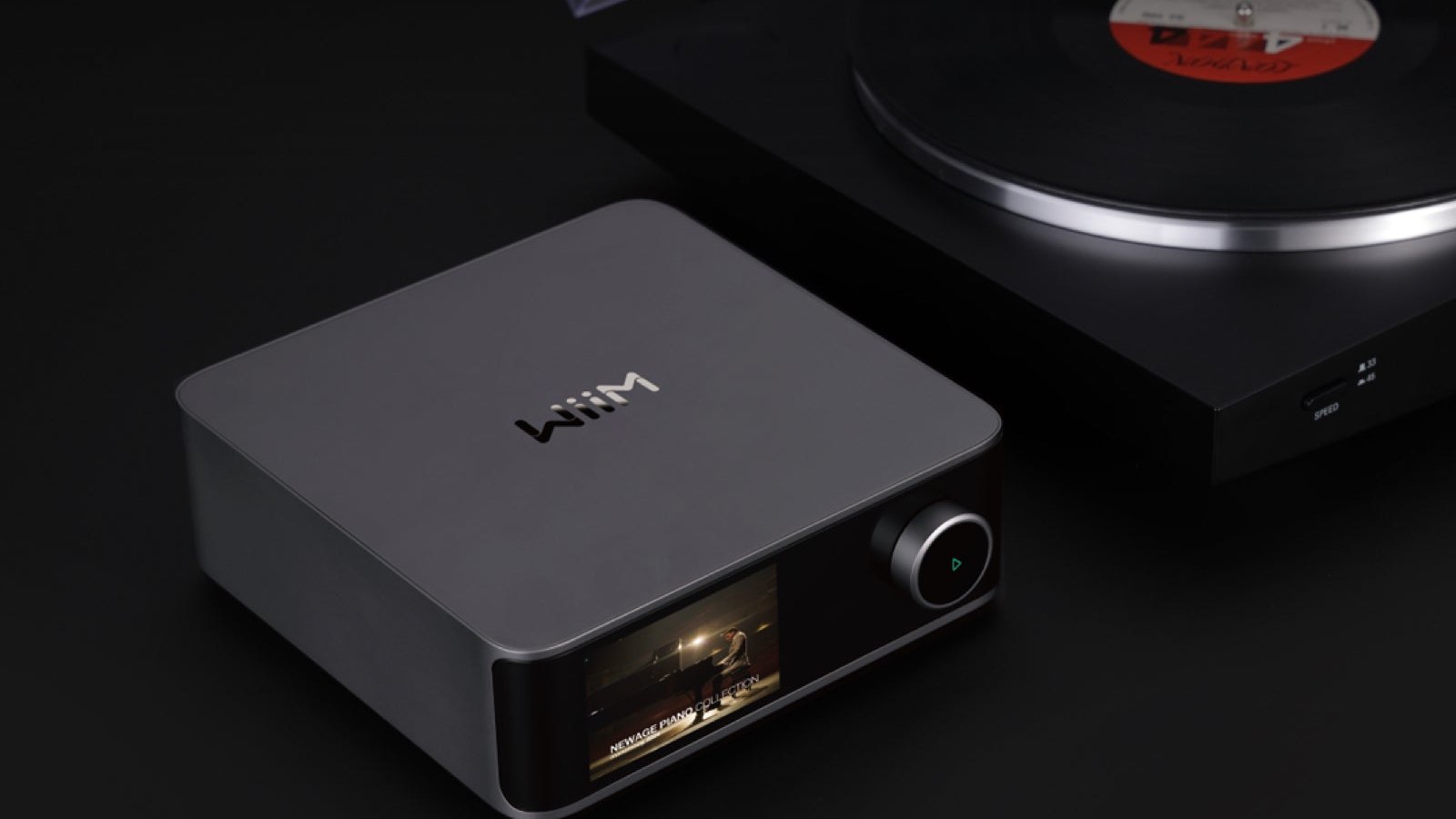
This is exactly the kind of thing our listening room settles in minutes: the same track, the same system, different services and resolutions. Streamers from WiiM and Arcam are set up and ready — see what’s on demonstration, then arrange a demonstration and bring your own subscriptions; we’ll do the comparing. New to streaming altogether? Start with our streaming explained guide.
Found this guide useful, or got questions? We’re happy to talk it through — no hard sell, just straight answers. Contact us or call 01743 234945.