

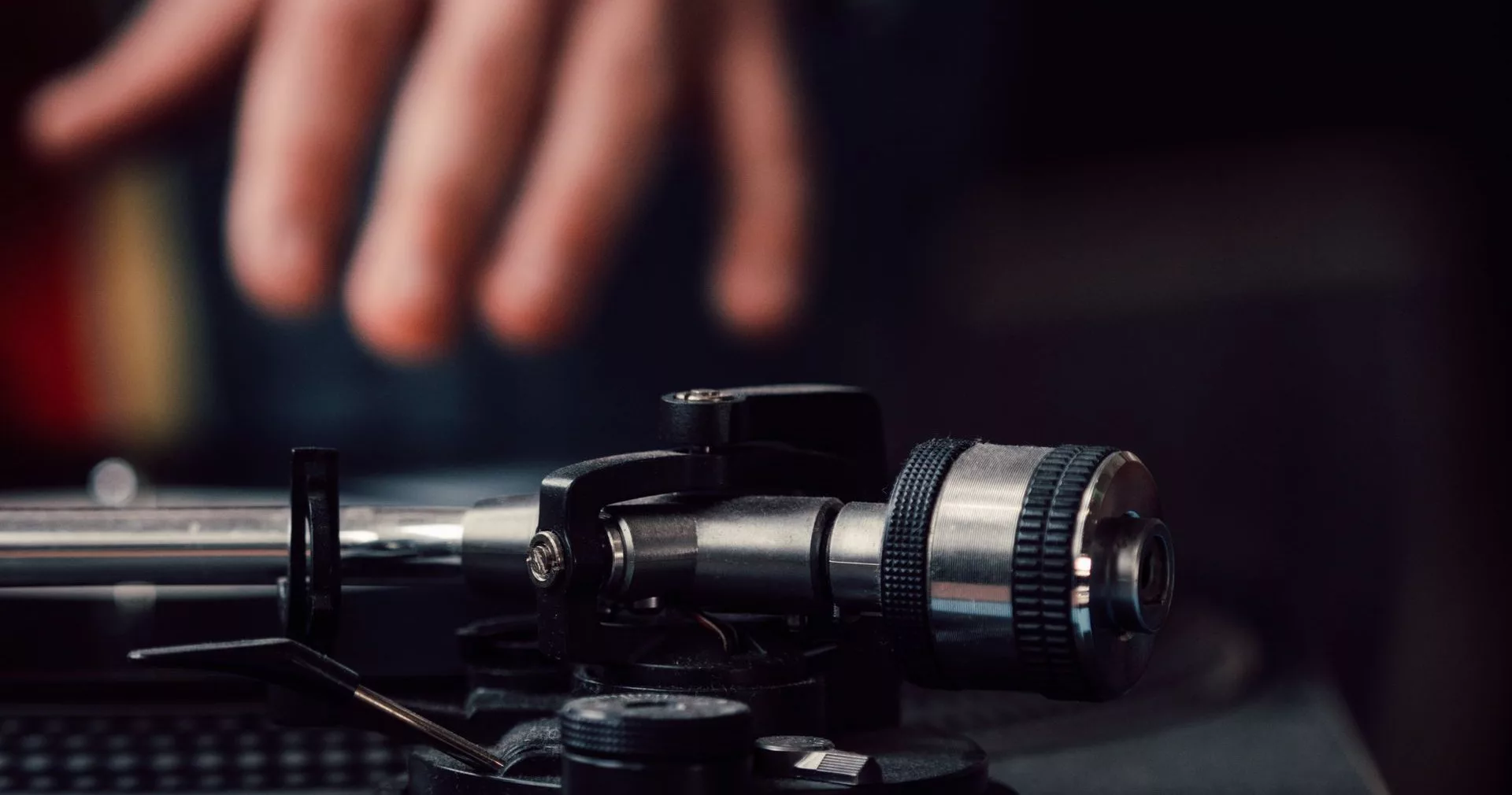
More vinyl performance is lost to setup than to any budget limitation. A modest deck set up properly will embarrass an expensive one thrown on a shelf — and everything on this list is free.

1. Level, on a surface that does not move
A spirit level on the platter: bubbles centred. The shelf matters as much — a springy sideboard by a bouncy floor feeds footsteps straight into the stylus. Solid, rigid, ideally not between the speakers; our supports guide explains why.
2. Tracking force: trust numbers, not folklore
Every cartridge has a recommended downforce; set it with the counterweight and, if possible, a cheap stylus gauge, aiming mid-range. Too light does more damage than slightly heavy — the stylus rattles the groove instead of riding it.
3. Anti-skate, the forgotten dial
Set it to match the tracking force as your manual describes. Wrong anti-skate pulls the stylus into one groove wall: uneven wear, distortion in one channel, mystery sibilance.
4. Cartridge alignment
The one step that intimidates people. If your deck came with a fitted cartridge — like the Pro-Ject decks we stock — it left the factory aligned. Changing a cartridge means a protractor, patience, or five minutes of our time.
5. Listen for the tell-tales
Sibilant esses, one-sided distortion, muddy inner grooves: all classic setup symptoms. A worn stylus adds harshness and eats records — see vinyl care for spotting it.
Or let us do it properly
Every turntable we sell leaves set up correctly, cartridge aligned and tested — and our workshop will check over a deck you already own. Bring it in, or arrange a visit and watch how it is done.
Found this guide useful, or got questions? We’re happy to talk it through — no hard sell, just straight answers. Contact us or call 01743 234945.