

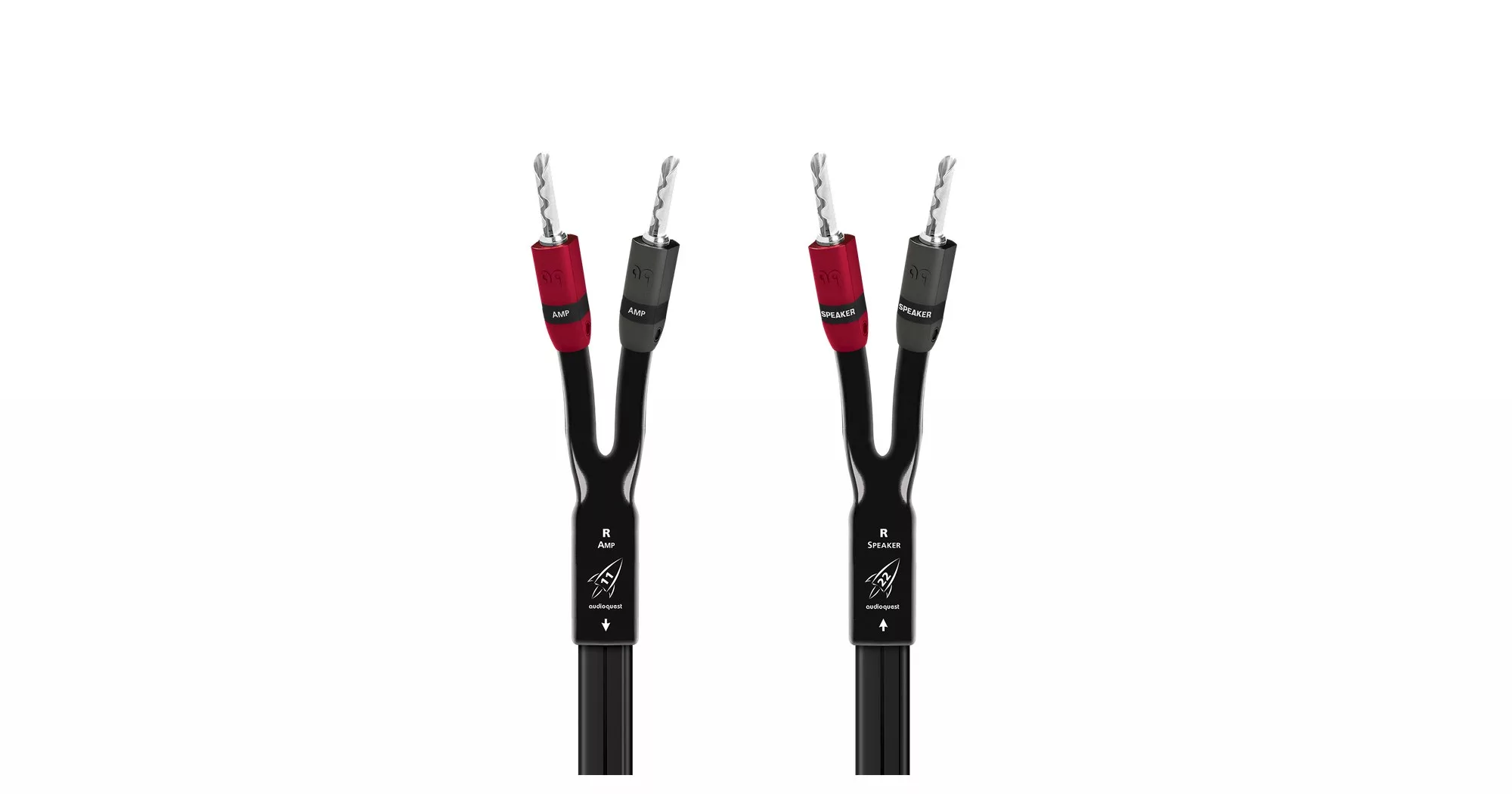
Few subjects in hi-fi generate more heat than cables. One camp insists they transform a system; the other insists they’re snake oil. As a shop that sells them, you might expect us to side with the first camp — but the honest answer sits in the middle, and it starts somewhere unglamorous.

Fundamentals first
Before any cable is worth discussing, the basics should be right: loudspeakers positioned properly, equipment on stable support, sources set up correctly. These cost little or nothing and make differences everyone can hear — our speaker placement guide is the place to start. Cables don’t always need changing; but they should be right before more significant equipment is considered.
Where cables genuinely earn their keep
Three situations, in our experience. First, replacing the freebies: the thin interconnects bundled in equipment boxes and bell-wire speaker cable are built to a cost of pennies, and a well-made cable of sensible gauge with decent terminations is an audible, worthwhile step. Second, long runs and awkward rooms, where adequate speaker-cable gauge genuinely matters. Third, video and streaming: HDMI is a bandwidth problem, and a certified high-bandwidth lead like AudioQuest’s simply removes a source of glitches in a home-cinema system.
Where honesty is due
Beyond that, returns diminish. Differences between well-made cables exist, but they are refinements, not transformations — smaller than the difference a better source, amplifier or loudspeaker makes, and smaller still than getting the room right. A sensible rule of thumb: cables deserve a small slice of a system’s budget, not a headline share. If a dealer tells you a cable will revolutionise your system, keep a hand on your wallet.
Speaker cable: the sums that matter
The one cable property with a predictable, audible effect is resistance, and resistance comes down to thickness and length. For runs of up to about five metres, a 1.5mm² cable is perfectly adequate; for longer runs, or for loudspeakers that are hard to drive, 2.5mm² or more is the sensible choice. Check what the conductor is made of as well: some bargain cable is aluminium with a thin copper coating, which has noticeably higher resistance than the solid copper it resembles. There is no need to cut both lengths identical to the centimetre.
Plugs, bare wire and those brass links
How a cable is terminated matters at least as much as what it is made of. Bare wire works, but it tarnishes over time and stray strands are the classic cause of a shorted amplifier output. A properly fitted plug is tidier and more reliable. If your loudspeakers have two pairs of terminals joined by flat metal links, those links are often the weakest part of the chain; swapping them for short lengths of proper cable is a cheap experiment worth trying before anything more ambitious.
Digital and mains, briefly
A digital cable either delivers the data or it does not, so buy for sound construction rather than promises. Optical leads have one real advantage — no electrical connection, which makes them a good cure for hum between a television and a hi-fi — and one weakness: they dislike tight bends. For modern televisions and games consoles, look for a certified Ultra High Speed HDMI lead. And keep signal cables away from mains leads where you can: let them cross at right angles rather than run side by side, and do not leave spare cable coiled behind the rack.
How we approach it
We stock AudioQuest because the products are honestly made, sensibly priced across the range, and easy to demonstrate. And demonstration is the point: swap a cable in the listening room and you’ll know within minutes whether the difference matters to you — no faith required. See what’s currently on demonstration, or arrange a demonstration and we’ll set up the comparison. Wondering about the rest of your system first? Our upgrades service looks at the fundamentals before recommending anything.
Found this guide useful, or got questions? We’re happy to talk it through — no hard sell, just straight answers. Contact us or call 01743 234945.