

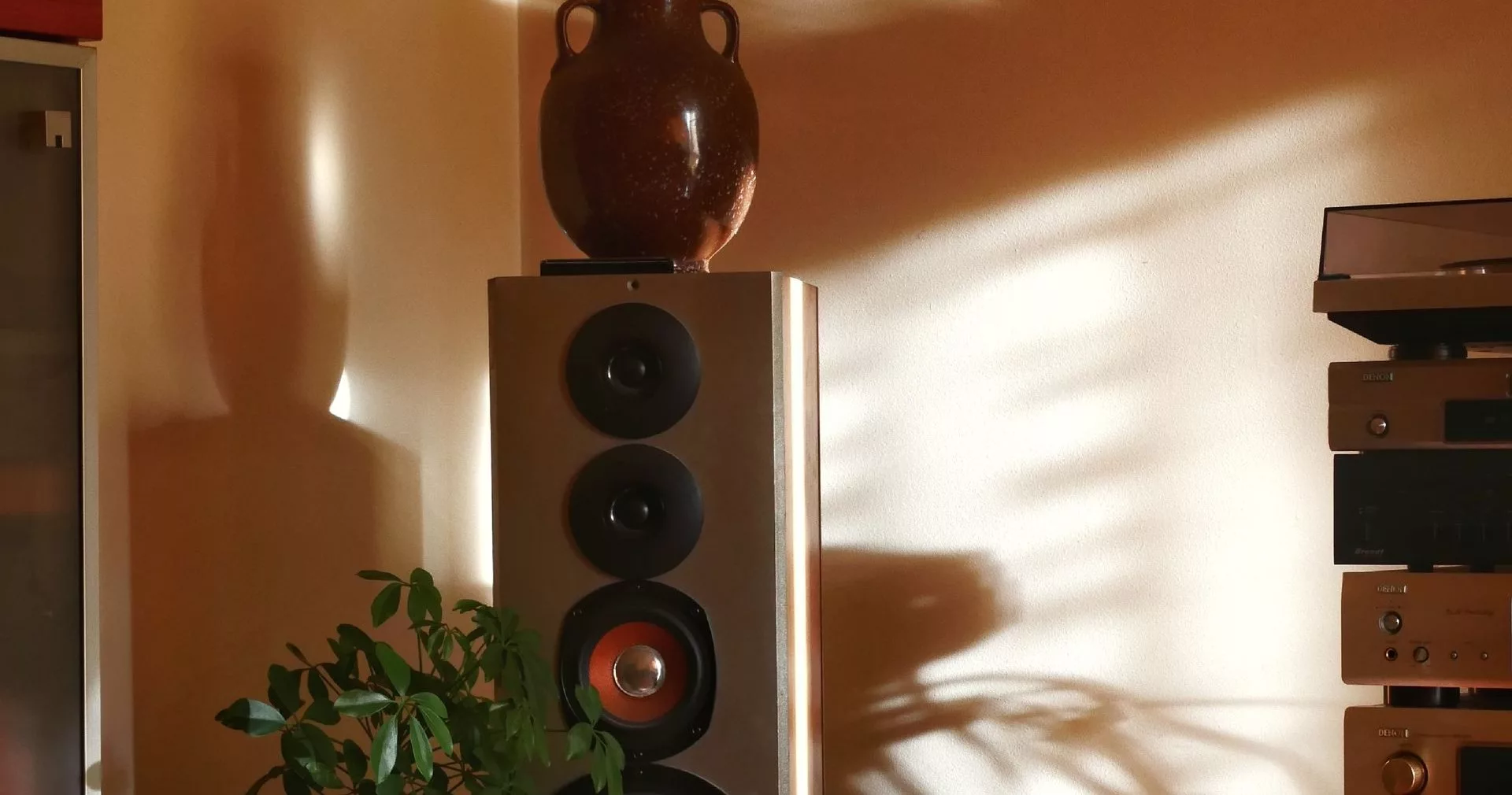
Here is the uncomfortable truth of hi-fi: the room you listen in shapes the sound more than any single component in it. The good news — improving it costs somewhere between nothing and a nice rug.
What your room is doing
Sound leaves the speakers, and a fraction of a second later copies arrive from the floor, walls and ceiling. Your brain merges them: the room brightens treble, smears detail and piles up bass in some spots while cancelling it in others. Same system, different room — different sound entirely.
The first reflection trick
Sit in your chair and have someone slide a mirror along the side wall: wherever you can see a speaker in it, treble bounces straight to you. Something soft or diffusing there — a picture, bookshelf, curtain — calms brightness at zero cost to the décor.
Soft, hard, and the balance
All-hard rooms zing; over-stuffed rooms suffocate. Aim for a mix: rug between speakers and seat, curtains over glass, books and furniture breaking up flat walls. Symmetry helps too — matching surroundings for left and right keeps the stereo image honest.
Bass: the stubborn region
Low frequencies ignore soft furnishings. If bass booms in your seat, moving the speakers or the chair a foot often does more than any purchase — and where physics won’t bend, measured correction like Dirac Live earns its keep, as does a properly placed subwoofer.
Where the speakers and the sofa go
Start with a triangle: the two speakers and your head at roughly equal distances from each other. Then look at the walls. Bass builds up against every boundary, so a sofa hard against the back wall sits in the boomiest part of the room — pulling it forward by even a foot can tidy things up more than you would believe. Speakers pushed into corners get the same unwanted boost. And the exact middle of the room is often where deep bass goes missing altogether, so a chair there can sound thin for no obvious reason.
Where you have the choice, firing the speakers down the length of the room usually works better than across its width: the sound has further to travel before the back wall sends it home again.
A five-minute room check
Two free tests tell you most of what you need. First, clap once, sharply, where you sit. A metallic ringing tail means two hard, parallel surfaces are passing the sound back and forth — the cure is to break one of them up. Second, play a track with a steady, even bass line and walk slowly around the room. You will hear the bass swell in some places and all but vanish in others. That is the room, not the system, and it shows you where a chair should and should not live.
Changes that do not need a decorator
A thick rug with a proper underlay beats a thin one. A full bookcase is among the best acoustic treatments ever devised, because irregular rows of spines scatter sound instead of bouncing it. Lined curtains tame a patio door. If that is still not enough, purpose-made acoustic panels now come covered in fabric or printed as pictures, and two or three at the reflection points are plenty in a living room. Stop before the room sounds dead: a little liveliness is what makes music sound like it is happening in front of you.
Hear what a good room sounds like
Our listening room is set up to show systems at their honest best — and we factor your room into every recommendation, which is why we ask about it before your visit and offer home demonstrations. Arrange a visit and bring a photo of your room; it genuinely helps.
Found this guide useful, or got questions? We’re happy to talk it through — no hard sell, just straight answers. Contact us or call 01743 234945.